Independence, Missouri
Attic Insulation in Independence, MO
Tell us about your Independence home and we will pass your request to a local contractor for a free estimate.
Independence has some of the oldest housing in the Kansas City area, from Victorian homes along North Main to the bungalows of Englewood and Fairmount. Attics in homes like these have often been insulated more than once over the years, and sorting out what is already up there is the first step.
Few places in the metro have a housing story as long as Independence. In the North Main neighborhood, many homes went up between the 1870s and the early 1900s, including Gothic Revival and Queen Anne houses and Kansas City Shirtwaists, with bungalows filling the gaps through the 1930s. Englewood and Procter are mostly 1910s to 1930s, with Craftsman, Prairie and Mediterranean Revival homes. Mount Washington and Fairmount hold 1920s and 1930s bungalows along with older Victorian and Foursquare summer homes. And the 153-acre Truman Historic District surrounds the home where Harry and Bess Truman lived.
Homes of these ages have one thing in common: their attics have been through a lot. A typical house may have had insulation added in the 1950s, again during the energy crisis of the 1970s, and perhaps once more since. That can leave a mix of rock wool, old fiberglass batts, loose fill and, in some homes, vermiculite. Some of those layers may be damp from old roof leaks or flattened by decades of storage. Animals have had a long time to find their way in, too.
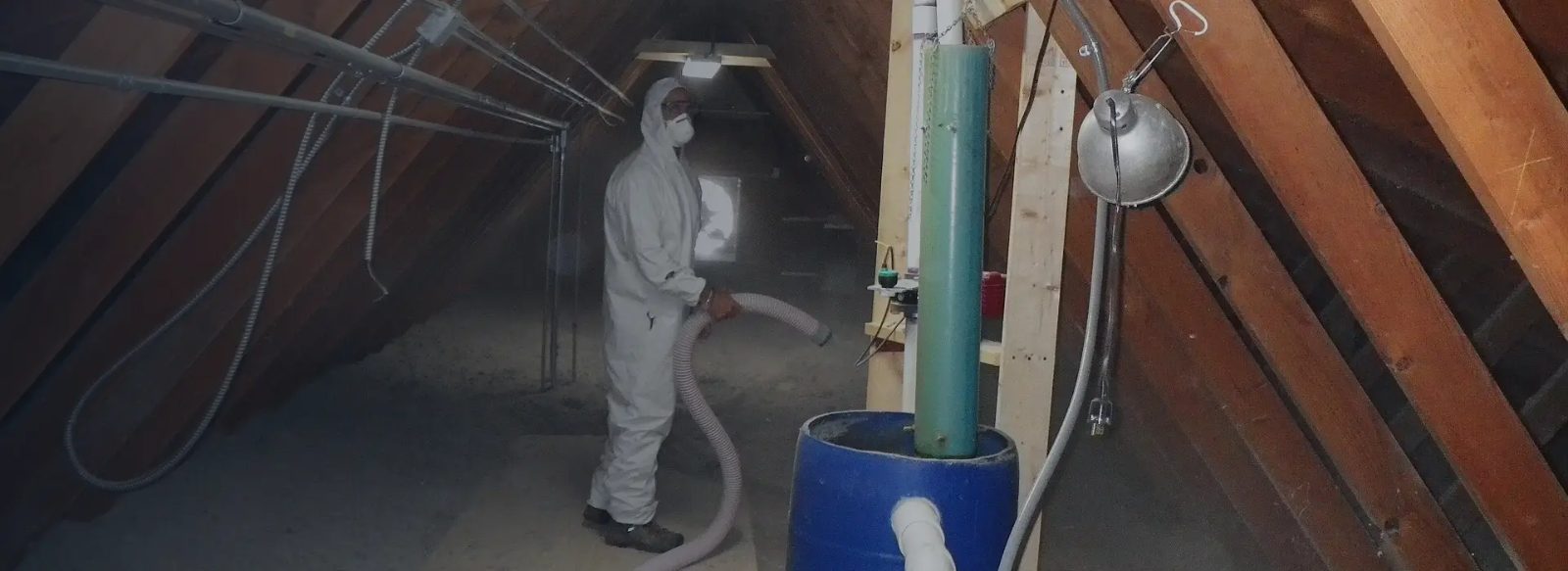
That is why removal comes up more often here than in newer towns. If the existing material is contaminated, mixed in a way that hides gaps, or may contain vermiculite, clearing it out lets the contractor seal the attic floor properly and start fresh. Vermiculite needs special attention, since some of it contains asbestos, and it should not be vacuumed out like ordinary insulation without testing and the right precautions.
Bungalows bring a specific challenge. Many have a finished half-story upstairs with sloped ceilings and knee walls, leaving small attic pockets at the sides and a tight space at the peak. Those pockets are often uninsulated or poorly sealed, which is why upstairs rooms in an Englewood or Fairmount bungalow can be so hard to keep comfortable. Reaching and treating them takes patience, and the contractor will explain what can be done in your particular layout.
Side pockets behind knee walls and sloped ceilings are reached and treated, not skipped.
Each layer of past insulation is checked for moisture, contamination or vermiculite before new material goes in.
Interior attic work is planned with Truman Historic District guidelines in mind whenever exterior changes are involved.
Usually in three places: the small attic pockets behind the knee walls, the sloped ceiling sections where possible, and the flat attic space at the top. Sealing the floor of the side pockets so air cannot flow under the rooms is often a key step.
Not always. If they are dry, clean and not vermiculite, new insulation can go on top after sealing. If any layer is wet, contaminated or suspected vermiculite, the contractor will likely recommend removing or testing it first.
Attic insulation is interior work that does not change the outside of the house. If you plan exterior changes, such as new roof vents, it is worth checking the city's historic preservation guidelines before the work is scheduled.
Vermiculite looks like small, lightweight pebbles, usually gray-brown or silvery-gold, and it pours like loose gravel. If yours looks like that, leave it undisturbed and mention it in your request so it can be handled correctly.
Send a request from Independence and a local contractor will reach out to set up a visit and a free estimate.
Free — no obligations