Kansas City, Missouri
Attic Insulation in Kansas City
Tell us about your home and we will pass your request to a local contractor for a free estimate.
Kansas City asks a lot of a house. January brings single-digit mornings and wind that cuts across open ground, and July can hold the nineties for weeks with humidity that makes the air feel heavier still. Through all of it, the attic is the part of your home doing the most work and getting the least attention. Heat rises into it in winter and bakes down from it in summer, and whatever sits on the attic floor decides how much of that heat reaches the rooms where you live.
In a lot of Kansas City homes, what sits up there is not much. Plenty of houses built in the middle of the last century started with a few inches of insulation, and much of it has packed down, shifted or been disturbed by years of cable runs, recessed lights and storage boxes. Newer homes are not always better off, since builders often install the minimum and move on. The result looks the same on both ends: upstairs bedrooms that never match the thermostat, a furnace that runs and runs, and utility bills that climb every season.
Adding insulation and sealing the gaps under it is one of the more practical upgrades a homeowner can make. It is quiet work, it usually takes a day or less, and you feel the difference the first cold night after it is done. This site exists to make the first step easy. You tell us what is going on, and we put you in touch with a local contractor who can tell you what your attic actually needs.
Here is how Insulation Lee's Summit works, in plain words. We are a request service, not an installer. When you fill out the form or send us an email, we take down the details about your home and pass your request to an independent local contractor who does attic insulation work around Kansas City. That contractor contacts you directly, sets up a time to look at your attic, gives you the estimate and, if you decide to go ahead, does the work. We do not climb into attics, we do not set the price, and we are not the party you sign an agreement with.
We set things up this way because most people searching for insulation help do not want to call six companies and repeat the same story six times. You describe your home once, and the request goes to someone who handles this kind of job every week. Sending a request costs you nothing and does not commit you to anything. If the estimate does not suit you, you are free to say no thanks. Any questions about the scope of work, scheduling, materials or payment are settled between you and the contractor, since they are the one doing the job.
More about usThree services cover what most Kansas City attics need, from topping up a settled layer to clearing out old material that should not stay.
Blown-in or batt insulation added to bring a thin or settled attic floor up to a level that suits the Kansas City climate. The contractor measures what is there now and recommends how much to add.
Learn more →Closing the hidden openings that let conditioned air escape into the attic, such as gaps around plumbing stacks, wiring holes, light fixtures and the attic hatch. Sealing first makes any new insulation work far better.
Learn more →Clearing out insulation that is damp, moldy, contaminated by pests or smoke, or simply too compacted to help. Removal gives the contractor a clean attic floor to seal and insulate properly.
Learn more →We take requests from homeowners across the Kansas City area, including Raytown, Blue Springs, Lenexa, Overland Park, Olathe, Liberty, Independence, Grain Valley, Raymore and Grandview. Each request goes to an independent local contractor who serves your part of the metro.
Whether your home is in Missouri or Kansas, the process is the same. Send your request, and the contractor reaches out to schedule a visit, look at your attic and give you a written estimate.
See all service areasYou explain your home and your problem one time. We pass it along so you are not repeating yourself to a string of offices or waiting on callbacks that never come.
Requests go to an independent contractor who already works in Kansas City neighborhoods on both sides of State Line, so they know the local housing and the local weather.
Sending a request is free. The estimate is free. Whether you move forward is entirely your call, and nobody should pressure you into a decision on the spot.
The contractor looks at what is actually up there before recommending anything, so the advice you get is based on your house rather than a one-size package.
Most attic insulation jobs follow the same basic order, and knowing it helps you judge whether an estimate is complete. The visit starts with an inspection. The contractor goes up through the hatch or pull-down stairs, measures the depth of whatever insulation is already on the attic floor, notes what type it is, and looks for trouble such as water stains, signs of animals, crushed areas and blocked vents. They will usually check the bathroom fans too, because a fan that dumps moist air into the attic instead of outside is a common problem that should be fixed before anything else goes in.
Next comes preparation. Baffles, sometimes called rafter vents, go in at the eaves so that new insulation does not block the soffit vents that let the attic breathe. Recessed lights that are not rated for contact with insulation get covers or a clearance dam. A dam is also built around the attic hatch so that loose insulation does not spill out when you open it. Chimneys and flues need a gap and a noncombustible barrier, and a careful contractor will point those out as they go.
Air sealing usually happens at this stage, while the attic floor is still easy to reach. Gaps around pipes, wires, duct boots and the tops of interior walls are filled with foam or caulk, and larger openings are covered with rigid board before being sealed.
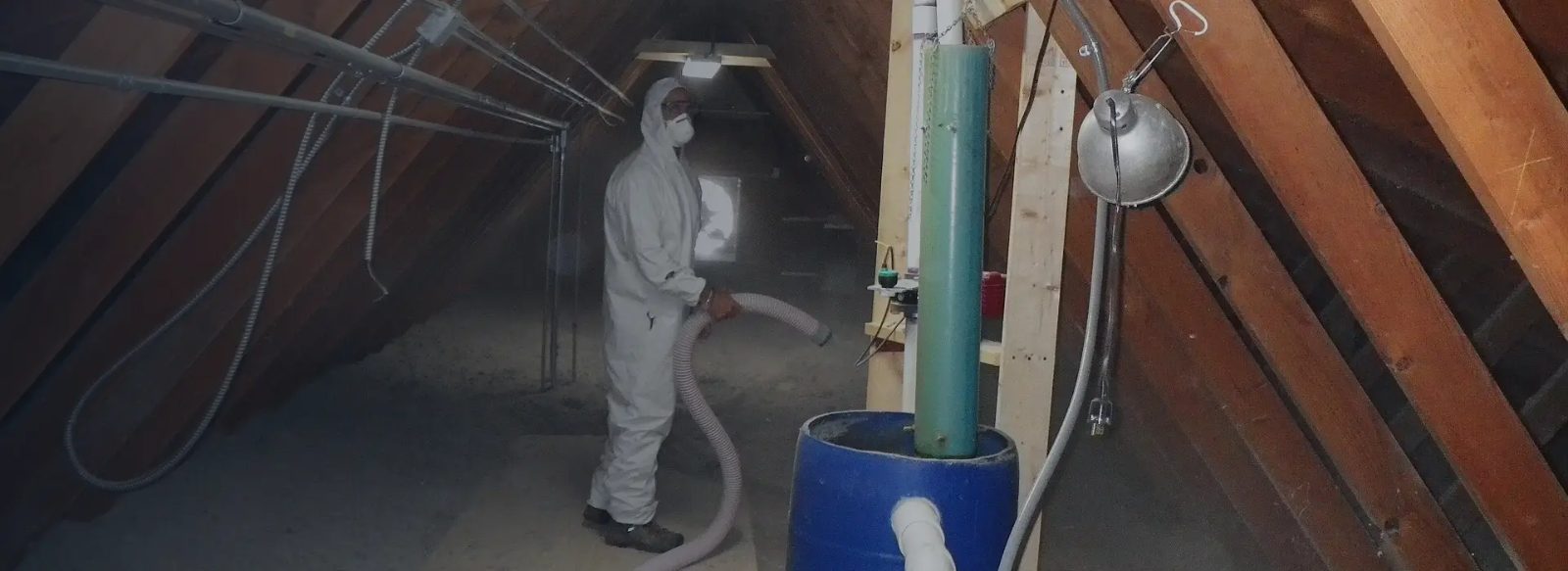
Then the insulation itself goes in. For blown-in material, a machine outside or in a truck feeds loose fill through a long hose, and the installer moves across the attic spreading it to an even depth. Depth markers stapled to the framing let you see the final level. Batts are cut and laid by hand, which suits open, easy-to-reach spaces. A typical home is finished in a few hours to a day, with very little mess in the living space. Before leaving, the installer should show you the finished depth and leave you a record of the material and amount installed.
You do not have to climb into the attic to suspect a problem. The house usually tells you. The most common clue is a temperature split between floors. If the upstairs bedrooms run several degrees warmer than the main level every summer, or the rooms under the roof feel chilly on winter nights even with the furnace running, heat is moving through the ceiling far too easily.
Utility bills are another clue, especially when they climb year after year without any change in how you live. A furnace or air conditioner that seems to run almost constantly on the hottest and coldest days is often fighting heat loss and gain at the ceiling rather than failing on its own.
Winter gives you a free look at the problem. After a light snow, walk outside and compare your roof to the neighbors. If the snow on your roof melts in patches or disappears long before it does on similar houses nearby, warm air is escaping into the attic and heating the roof deck. Icicles that form along the gutters and ice that builds at the roof edge point to the same thing. On the inside, look for dark streaks on ceiling drywall near the top of exterior walls, which can come from air moving through gaps and leaving dust behind.
If you can safely peek through the attic hatch with a flashlight, the signs get easier to read. Insulation that sits level with or below the tops of the ceiling joists is almost certainly too thin for this climate. Bare spots, insulation pushed into piles, matted areas where someone walked or stored boxes, and gray or dark patches in fiberglass all suggest that air is moving through it. Old material that looks like small gray-brown pebbles may be vermiculite, which should not be disturbed until it has been looked at by someone qualified.
None of these signs proves exactly what your attic needs, but two or three of them together are a good reason to have a contractor measure it.
Every attic is different, which is why an honest contractor will want to see yours before giving a number. Knowing what drives the estimate helps you compare quotes fairly and spot one that leaves something out.
The first factor is size. The square footage of the attic floor, which is roughly the footprint of the top level of the house, sets how much material is needed. The second is how much insulation is already there. An attic with a few inches of settled fiberglass needs more added than one that is halfway to the target, and an attic with damaged material may need it removed first, which is a separate step with its own labor.
The target level matters too. Department of Energy guidance for the Kansas City climate zone recommends attic insulation in the range of R-38 to R-60, and the higher you go, the more material goes in. The type of material plays a part as well. Blown cellulose, blown fiberglass and fiberglass batts each have their own price and their own strengths, and spray foam on the roof deck is a different kind of project altogether.
Access and layout are often overlooked. A wide, open attic with a walk-up stairway is quick work. A low-slope ranch roof where the installer has to crawl to the eaves, a home with several separate attic sections, or a hatch tucked in a closet all take longer. Prep work adds up as well: baffles at every rafter bay, covers for old recessed lights, a dam at the hatch, and repairs to bath fan ducts.
Finally, air sealing. A job that includes careful sealing of the attic floor takes more time than one that simply blows material over the gaps, but it is also the part that makes the biggest difference in comfort. When you compare estimates, check that each one lists the depth or R-value, the material, the prep work and whether air sealing is included.
The Kansas City area sits in a climate that is hard on houses from both directions. Winters bring hard freezes, sharp winds out of the north and stretches where nighttime temperatures stay well below twenty degrees. Summers are long, humid and hot, and a roof in full afternoon sun can push attic temperatures far above the outdoor reading. That means your attic is a problem in twelve months of the year, not just one season.
In winter, the main issue is warm air leaking up through the ceiling. Heated air is lighter, so it pushes into the attic through every gap it can find, pulling cold outdoor air into the lower floors to replace it. That is the stack effect, and it is why a drafty house often feels coldest near the floor. The leaking air also carries moisture from cooking, showers and breathing. When it reaches a cold roof deck it can condense, which leads to frost on nails, damp sheathing and, over time, mold or rot.
In summer, the direction flips. The hot roof radiates heat down onto the attic floor, and thin insulation lets it pass straight into the rooms below. Ductwork that runs through the attic, which is common in many area homes, makes things worse, because the cooled air inside those ducts picks up heat before it ever reaches a vent.
The swings between seasons matter as well. Freeze and thaw cycles, heavy spring rain and the occasional ice storm all test the roof and the attic below it. Insulation that gets wet from a roof leak loses much of its value and can hold moisture against the framing.
Good attic work in this climate does three things at once. It seals the air paths so moist indoor air stays indoors, it adds enough insulation to slow heat in both directions, and it keeps the attic ventilated so it can dry out. A contractor who works locally will plan for all three.
Homeowners often ask which insulation is best, and the honest answer is that it depends on the attic. Each common option has a place, and a good contractor will explain why they recommend one over another for your house.
Blown cellulose is made mostly from recycled paper treated with fire retardant. It settles into gaps and around obstacles well, it resists air movement better than loose fiberglass, and it works nicely for topping up an existing layer. It is heavier than fiberglass and does settle somewhat after installation, so installers usually blow it a little deeper to account for that.
Blown fiberglass is lighter, does not absorb moisture the way paper can, and holds its loft over time. It needs a bit more depth than cellulose to reach the same R-value, and it does less to slow air on its own, which makes air sealing underneath it especially important.
Fiberglass batts come in rolls or precut pieces that are laid between the joists. They suit open attics where the installer can work comfortably, and they are often used in knee walls and around attic storage areas. Their weakness is the fit. Gaps at the edges and spots squeezed around wires let heat slip past, so the quality of the installation matters a great deal.
Spray foam is applied directly to the underside of the roof deck or used in specific spots like rim joists and knee walls. It seals and insulates at once and can turn the attic into a conditioned space, which is helpful when ductwork or a furnace sits up there. It is a larger project that changes how the attic works, so it deserves a careful conversation.
Many homes end up with a mix: foam or caulk to seal the attic floor, then blown material on top. When you get an estimate, ask why that material was chosen and how deep it will go.
Insulation is one of those jobs where the finished work disappears under a layer of fluff, so it pays to choose carefully. A few simple questions will tell you a lot about the person you are inviting into your attic.
Start with the inspection. A contractor worth hiring will want to go into the attic before quoting, measure the existing depth and look for leaks, moisture and ventilation problems. A price given over the phone from square footage alone tells you very little about what you will get.
Ask what the estimate includes, and get it in writing. It should name the material, the target R-value or depth, the area covered, and the prep work such as baffles, hatch dams, light covers and bath fan repairs. If air sealing is included, it should say so and describe the main areas being sealed. If removal is part of the job, the estimate should explain how the old material will be handled and where it goes.
Ask about insurance and any licensing your city requires. Rules differ from town to town and between the Missouri and Kansas sides of the metro, and a contractor working in your area should be able to answer the question without hesitation. You can also check whether a permit is needed for your project.
Pay attention to how they talk about safety. Old vermiculite, knob and tube wiring, recessed lights and chimneys all need special handling, and a careful contractor will bring them up before you do.
Ask how you will know the job was done right. Depth rulers on the framing, photos of the finished attic and a certificate showing the material and amount are all reasonable to expect.
Finally, take your time. Insulation is rarely an emergency, and nobody should push you to sign the same day. Through this site, the estimate is free and there is no obligation, so you can weigh it at your own pace.
Insulation Lee's Summit does not do the attic insulation work itself. When you call or send the form, we pass your request to an independent local contractor who covers your part of Missouri. That contractor contacts you, gives you the estimate and does the work.
See what happens after you callThere is no cost to ask and no obligation to hire.
Free — no obligations